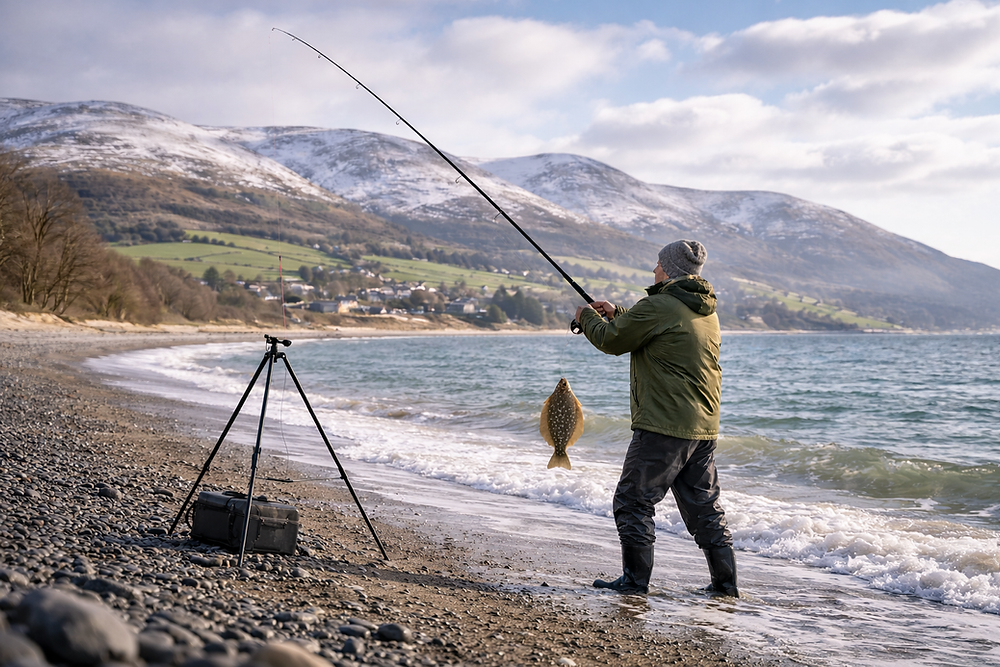
As the winter chill settles over the United Kingdom, many sea anglers reluctantly pack away their rods, waiting for warmer days. But while the beaches may grow quiet, the winter flounder continues to thrive. "Winter flounder fishing from the UK shore is one of the most underrated forms of sea angling going," notes marine expert John Reid. Accessible and often overlooked, this fishing technique can reward those who venture out into the cold.
"Winter flounder fishing from the UK shore is one of the most underrated forms of sea angling going,"
One of the primary reasons winter is an excellent time for flounder fishing is the fish's resilience to colder waters. Unlike other species that retreat in the cold, flounder remain active and can be targeted with success. "In fact, winter can be one of the best times of year to target them from the shore," said Reid, emphasizing that estuaries, harbors, and sandy shores become prime spots for eager anglers.
"In fact, winter can be one of the best times of year to target them from the shore,"

Identifying where to fish is crucial. The best locations typically include estuary mouths, mudflats, harbors, and sheltered areas free from turbulent waves. "If you can find slack water, gentle tides, and soft ground, you’re already halfway there," advises seasoned angler Liz Carter.
"If you can find slack water, gentle tides, and soft ground, you’re already halfway there,"

Timing also plays a significant role in successful winter flounder fishing. Anglers should focus on particular tidal periods, specifically the last hour of the ebb tide and the first hours of the flood tide. According to Carter, "Smaller neap tides rather than big spring tides" are preferable, as bigger tides can disturb the water too much, making it challenging to present bait correctly.
"Smaller neap tides rather than big spring tides"
Race Results
Race Results
Race Results
Targeting flounder doesn't require elaborate setups. The right bait can significantly enhance your chances. Frozen black lugworm is a favorite among anglers for its easy storage and effectiveness. "Use short sections rather than long, floppy worms. Neat presentation beats quantity every time," cautions Reid. Other options like blow lugworm and ragworm can also yield results, but keeping the bait presentation simple is critical.
Career Journey
In terms of rig choice, the flapper rig often proves to be the best option for winter flounder fishing from the shore. This rig is simple, sensitive, and designed for close-range fishing. "Hooks sit close to the seabed, enabling excellent bite detection with minimal resistance when a fish picks up the bait," explained Carter. A two-hook flapper is usually ideal, minimizing the risk of tangles in low visibility or frigid temperatures.
"Hooks sit close to the seabed, enabling excellent bite detection with minimal resistance when a fish picks up the bait,"
When it comes to hook size, anglers often make the mistake of using hooks that are too large. About size one to size two hooks work best for targeting winter flounders. "Fine-wire hooks improve hook-ups, while avoiding bulky patterns will contribute to a more successful catch," stated Reid. This subtlety is essential as winter flounders tend to be less aggressive compared to their summer counterparts.
"Fine-wire hooks improve hook-ups, while avoiding bulky patterns will contribute to a more successful catch,"
Proper presentation cannot be overstated. Anglers should focus on using short snoods and light line, as well as ensuring the bait is properly situated on the sea floor. "Your bait should sit naturally on the seabed, not hover like a confused jellyfish," reminded Reid, highlighting the importance of presentation over brute force or aggressive casting.
"Your bait should sit naturally on the seabed, not hover like a confused jellyfish,"
Interestingly, casting distance may not be as critical as one might assume. "You don’t need to cast far," said Carter. Many successful catches come from within 40 yards, particularly in estuaries. She suggests exploring nearby structures or fishing calmer waters. "You’ll save energy, reduce tangles, and probably catch more fish."
Winter fishing does require an awareness of the beach’s features, even when it looks devoid of life. Paying attention to the details—like slight depressions in the sand—can indicate where fish may gather. As Reid notes, “Subtle features still matter.”
Career Journey
In summary, winter flounder fishing in the UK can be a rewarding experience for those willing to embrace the cold. By understanding the fish's behavior, employing the right techniques, and choosing the correct times and locations, anglers can enjoy relatively consistent success, even in the depths of winter. With fewer competitors on the shore, there's a unique serenity to the sport, making it well worth the chilly journey to the water’s edge.