Charlotte Harbor's Fishin' Frank's Fishin' Club has built its audience on the most parochial Florida format there is — the place-by-place fishing report. The May 8, 2026 episode opened with an unusual lead-in for a south-west Florida tackle shop: a private-pond arapaima session at Arcadia's Jurassic Jewels with DOA Lures founder Mark Nichols. From there, Frank settled into the regular Peace River, Highway 75, Highway 41 and Bayshore breakdown — and flagged a bull-shark run inshore that he said was unlike anything he had seen in 20 years.
The Jurassic Jewels detour produced a fish Frank put in the 200-to-300-pound bracket and a useful primer on what private arapaima ponds actually cost. "You can pay for different sized fish," he said. "When these fish get up to 200, 300 pounds, that's a lot of money tied up in a fish. They have to raise them for years and feed them and take care of them. Me, I like the 30, 40, maybe 60 to 80 pounds. They're the most fun, because you can use a little lighter tackle."
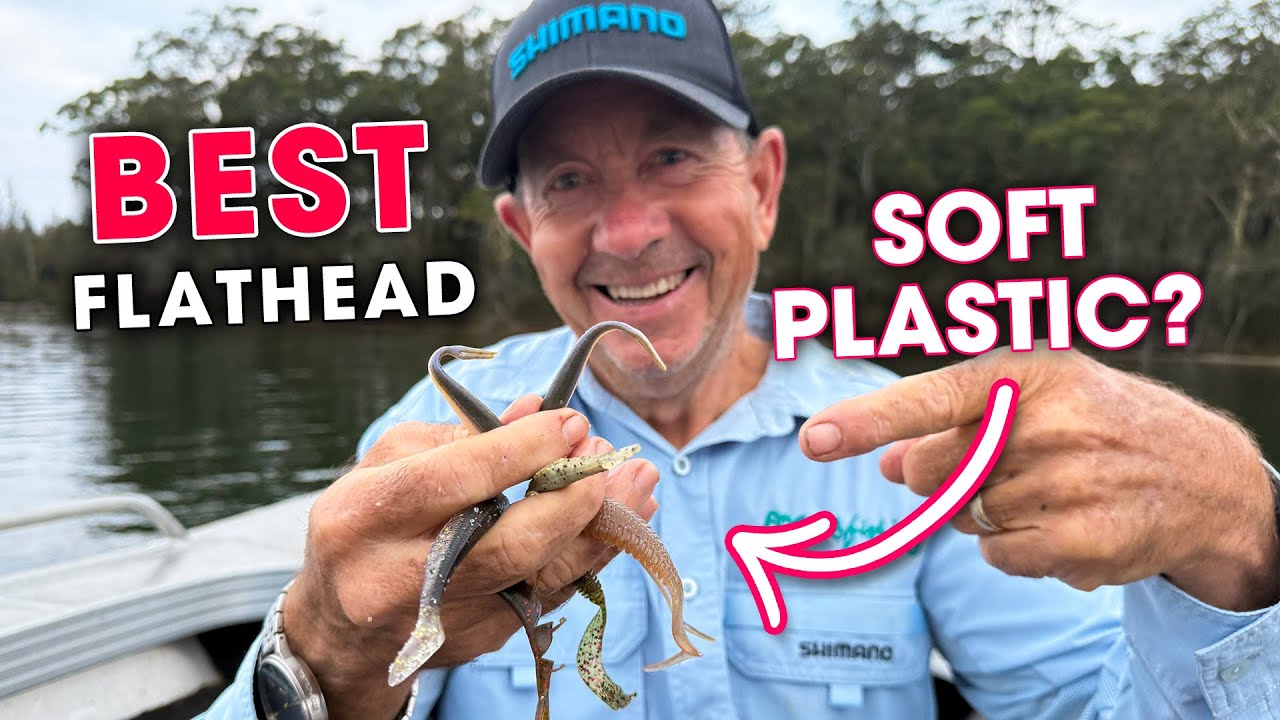
Mark Nichols ran the session on his own Bait Buster, the same DOA soft-plastic that has built a quiet reputation among Australian and US anglers travelling to South America to chase wild arapaima.
"If you're paying all that money to fly to South America and cross borders and go fishing in the creeks, make sure you got a root beer DOA Bait Buster with you," Frank told viewers. "Any colour will work, but the root beer seems to be the best one."
The place-by-place was the meat of the show. On the Peace River from Harbor Heights up to Shell Creek, there are reports of snook around the dam and small tarpon working the river bend. Snapper, small redfish, snook and the odd jack are stacked at the Sansushi trestle, and the water-treatment-plant stretch is producing baby tarpon and redfish through to the Harbor Heights ramp. The unexpected wrinkle is the volume of bull sharks.
"The bull sharks are going nuts up there," Frank said. "I don't know what it is about this year, but we've heard of more sharks up there than I've heard of in the last 20 years."
The Highway 75 corridor has been quieter than expected. Anglers have been hearing and seeing black drum but not converting them, while the redfish bite on the northbound side along the saw-grass flats has been steady. Shrimp continues to do most of the heavy lifting through the upper river, and Frank's bait-selection commentary was characteristically blunt.
"Shrimp just works," he said. "It works all year. White bait will work all year, but sometimes in the year it just doesn't work as well as shrimp. At different times, pinfish is the best out of all of them, or crabs, or whatever. It changes all year, but every bait works all year. It just works much better at some times."
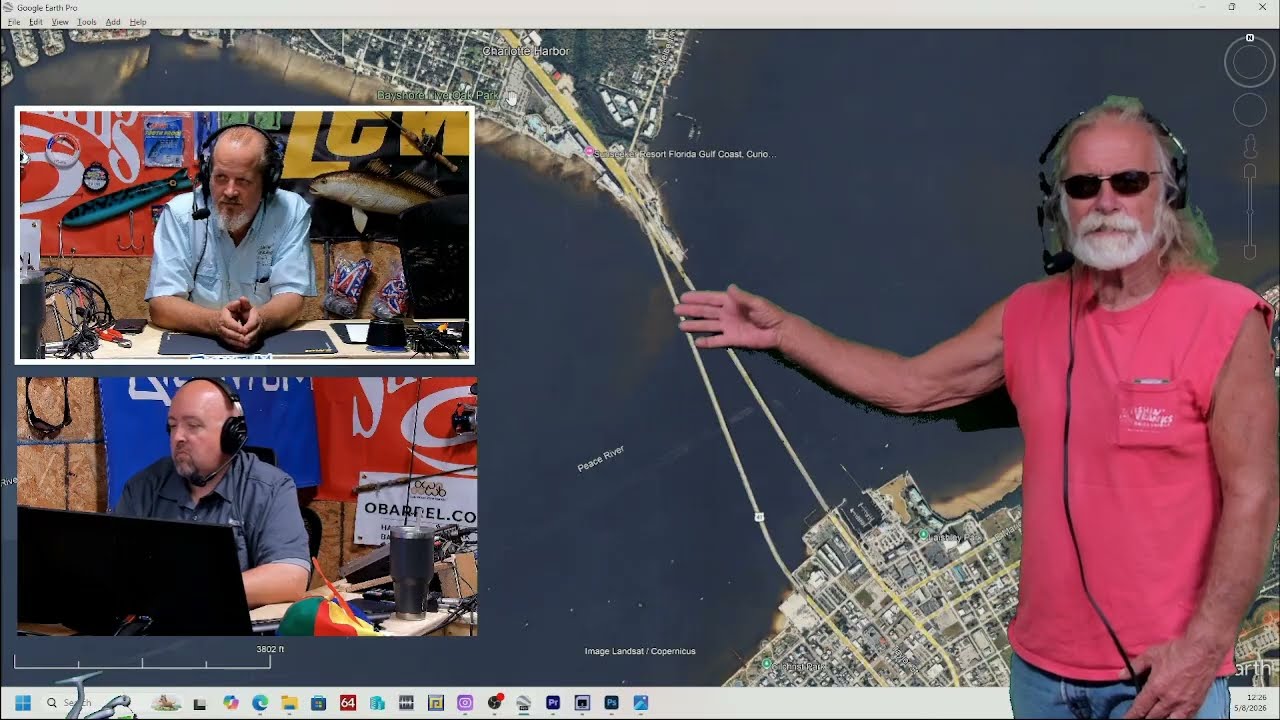
The stretch that turned the report into appointment viewing was Highway 41. Several cobia have come off the bridge structure into Port Charlotte this week, including a 37-inch fish landed by a nine-year-old angler with his father — a story Frank lingered on. He pulled up Google Earth and walked viewers through the bridge topography for any anglers planning a trip.
"This is the most likely place for cobia to be coming in and under," he said. "It can be anywhere along the bridge, but so often this is like 3 to 4 feet of water and this is 8 to 10. So along this ledge, that's where the vast majority of the cobia over the years have been caught."
His tactical recommendation was to stay on the deep side of the manatee-zone marker, drop a bait three to four feet under a bobber, or run a slow troll along the drop-off. Spanish mackerel, lady fish and a five-foot bull shark have also come off the bridge this week. Bayshore's piling clusters, which Frank initially dismissed as quiet, are reportedly holding fish on every set of pilings on the run.