Catching tailing redfish in Florida is regarded as one of the top challenges for anglers venturing into shallow waters. "When a redfish tail breaks the surface, you’re seeing a fish that’s actively feeding in shallow water — close enough to spook, but committed enough to eat if you deliver the right cast," said a seasoned fishing expert. Understanding the technique behind tailing redfish opens up exciting new fishing opportunities.
"When a redfish tail breaks the surface, you’re seeing a fish that’s actively feeding in shallow water — close enough to spook, but committed enough to eat if you deliver the right cast,"
Tailing redfish refers to a specific feeding posture where the fish positions its head down and tail up, revealing its tail in the water while searching for food like crabs and shrimp. "Any redfish with its nose down in the mud or grass and tail towards the surface we refer to as 'tailing'," explained the expert. This behavior is typically observed in calm conditions, particularly during the early morning or late afternoon.

"Any redfish with its nose down in the mud or grass and tail towards the surface we refer to as 'tailing',"
The likelihood of spotting tailing redfish increases significantly during low water periods. "The more calm the water, the further sway you can see the tails when they do pop up," the expert added. Low tides tend to concentrate bait, providing favorable conditions for anglers.
"The more calm the water, the further sway you can see the tails when they do pop up,"
Numerous factors contribute to the tailing behavior of redfish. "Slick conditions reveal subtle tails and dimples that are otherwise hidden by chop," said the expert, speaking to the favorable weather necessary for sight fishing. The fish tend to root in mud and grass flats where their preferred prey resides. This feeding posture directly exposes their tails.
"Slick conditions reveal subtle tails and dimples that are otherwise hidden by chop,"
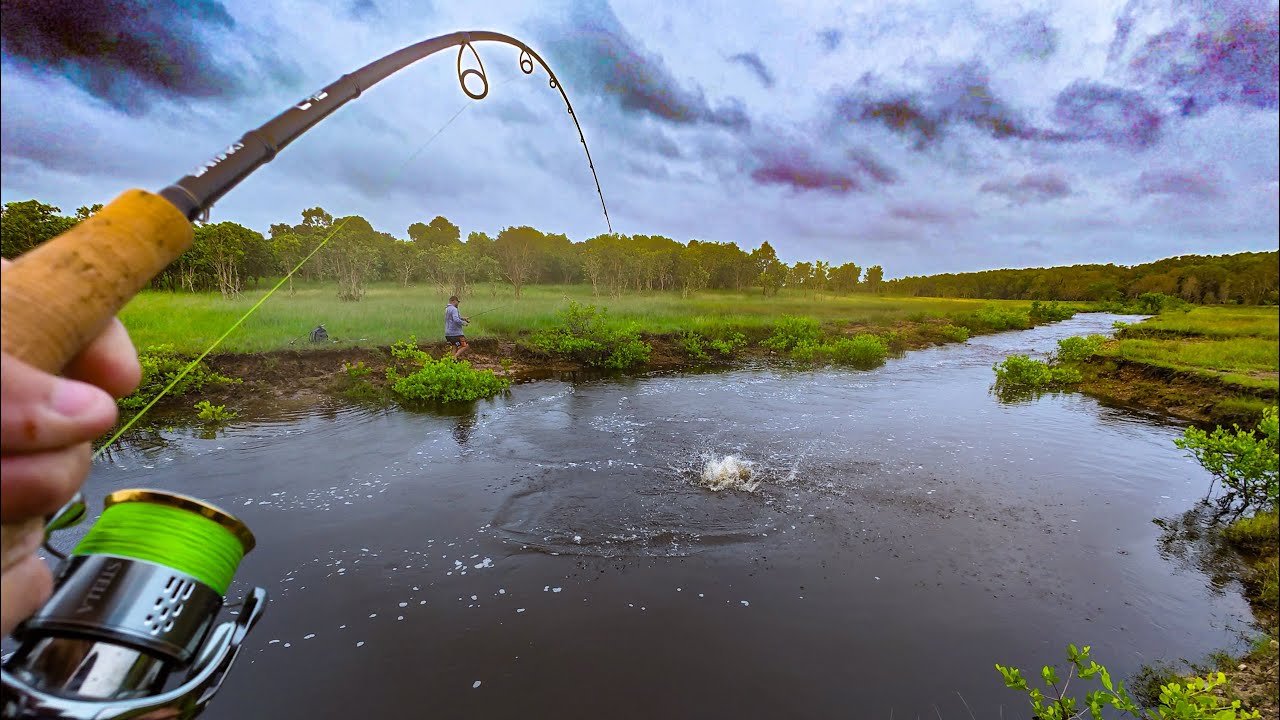
To successfully catch tailing redfish, anglers must use the right tackle setup. "The best lure is the one that you put in front of the fish and convince them to eat it," mentioned the expert while emphasizing the importance of lure selection. A proper spinning tackle setup is vital for engaging these elusive fish.
"The best lure is the one that you put in front of the fish and convince them to eat it,"
Key components of the tackle include using a 15–20 lb fluorocarbon or mono leader and a 5–15 lb braid for the main line. "Go lighter in slick water and heavier around oysters or mangroves," they noted. The choice of rod and reel plays a crucial role; a 7’ to 7’6” medium-light rod paired with a reel of 2500–3000 size is ideal for this type of fishing.
"Go lighter in slick water and heavier around oysters or mangroves,"
In terms of lures, some popular options include weedless rigged soft plastics, light jigs with shad tails, and weedless shrimp or crab plastics. Each lure offers specific advantages based on the fishing conditions. "Small twitches avoid spooking the fish," the expert advised regarding the presentation of these lures to the feeding redfish.
"Small twitches avoid spooking the fish,"
Approaching tailing redfish requires a deft combination of stealth, speed, and accuracy. "If you are not quiet enough you will never get a shot. Not fast enough they will be gone before you cast," said the experienced angler. It’s critical to recognize that the success of your cast hinges on your ability to approach the fish undetected.
In shallow waters, even small miscalculations can lead to missed opportunities. "A few inches off the mark and it never gets seen," the expert elaborated. Correcting one's stance according to wind and sun angle can also enhance the chances of success. The right moment to cast is essential; anglers must be ready to act when the fish is within optimal range.
"A few inches off the mark and it never gets seen,"
Career Journey
Career Journey
Career Journey
This multifaceted approach to catching tailing redfish combines careful observation, appropriate equipment, and precise technique. Early mornings and late afternoons present the best opportunities to put these strategies to the test as the quest for the elusive redfish continues in Florida’s famed waters. As redfish season progresses, the recent insights and techniques shared by seasoned anglers may just lead to a successful outing on the water.