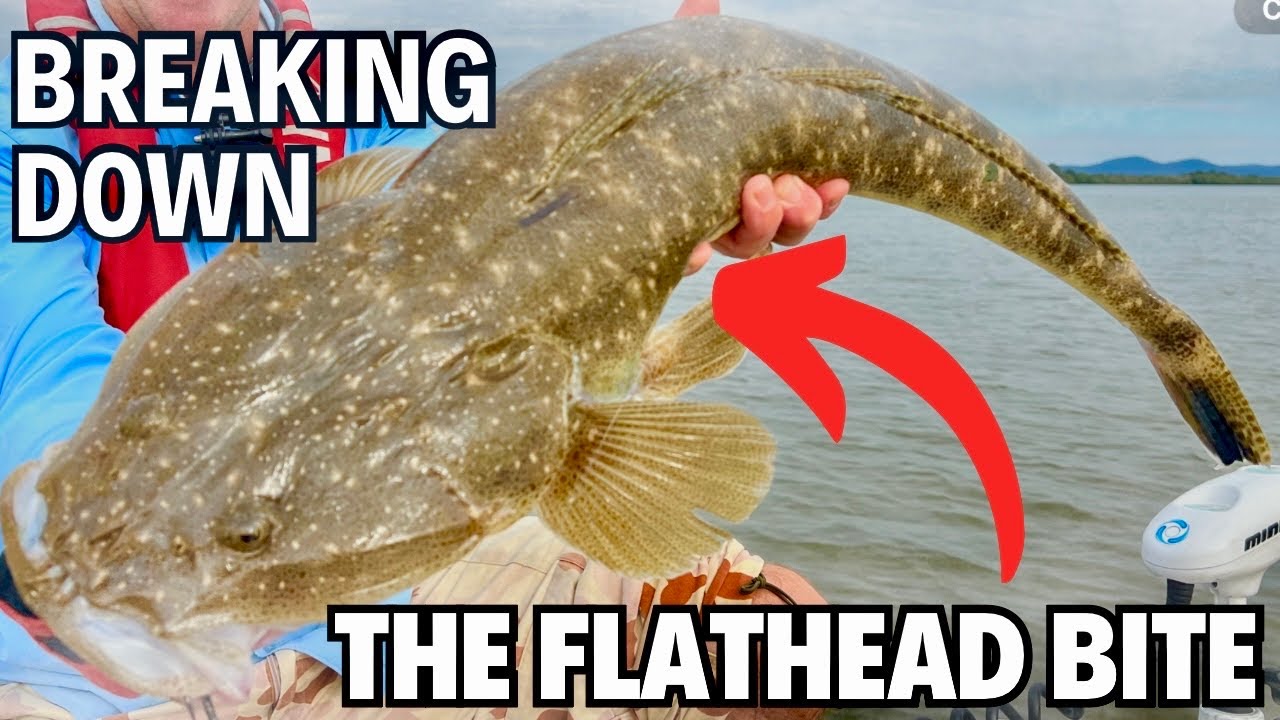
Recreational anglers chasing a feed of pan-sized flathead this season have a sharp new playbook to lean on, with My Lure Box releasing a deep-dive on the school-size flathead bite based on footage from his Gold Coast Elite Series Flathead grand final.
The centrepiece of the system is reading the surface of a flat through polarised lenses for sand-edge drops. The exact landing zone he wants the lure to hit is the lip where a flat falls away into a channel, with the soft plastic sinking down the face of the drop in front of any flathead pinned to the sand below.
"With flathead, so often that landing is a trigger for them to pay attention to what's landing. The sound of it is like a dinner bell," he said.
Missed strikes are not the end of a fish. He drops the same lure straight back into the same square metre on the next cast and works it slow. The retrieve is more pop than lift - just enough movement to keep the lure in the flathead's eyeline without lifting it out of the strike zone.
Timing runs through the tactical advice on two levels. The macro window is the falling tide where bait is being washed off the flats into the channel, especially where clean water meets dirty water as the run-out hits muddier ground. The micro window is the air time of the lure on the drop. "The best time is the air time, or time in the water before it hits the bottom," he said. "If it's moving really quick up and down because you've got a too heavy jig head, you're doing yourself out of a whole lot of air time for the flathead."
His tournament starting weight is 1/4 oz on a 3/0 painted jig head paired with a 4-inch soft plastic, dropped to 1/6 oz in shallower water with less tidal flow. Lures are built around two Australian-made plastics: the Gobblers Paddle Shad in 3.75 inch and a Holt Productions Holt Prawn, with UV, white-spot, motor-oil and red colours all earning rotation depending on water clarity. Off the rack, he leans on the Rapala Crush City Suspect on a Crush City Grippa Finesse jig head as a substitute when he can't get the boutique stuff.
The rod-and-reel package is intentionally light - a 2000 Stradic or Vanford 2-3000 on a Zodias 270M, with 8-10 lb braid run right to the spool lip for casting distance. Stealth fills out the pattern. The electric motor goes on and off in short pulses, a brick on a rope is used to anchor the boat in shallow water without spooking fish, and casts are fanned methodically because flathead routinely follow lures in for several casts before committing.
The big number from the video is the bite-window throughput. "You can rack up 5, 10, even 15 flathead in half an hour, 40 minutes of a bite if you get it right," he said. "It's not by pure luck that that fish has come and coughed up its feed. It has been feeding, and we've positioned ourselves right at the right spot at the right time."
For anglers who have been wondering why their soft plastics aren't getting eaten on otherwise fishy ground, the most likely culprits are heavy jig heads stealing air time, dirty water masking the lure, or simply the lure not landing on the right edge of the flat. The fix is the right weight, the right edge, and a slow front-loaded fall the flathead can lock onto.